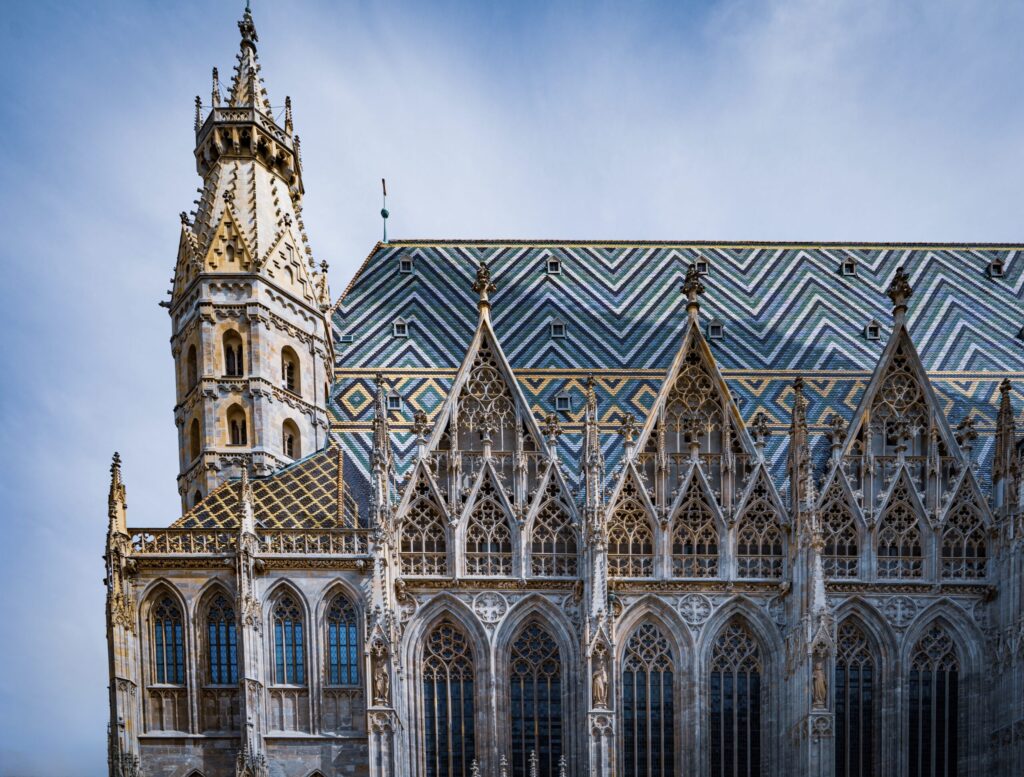
Vienna. The name alone conjures imperial grandeur, classical melodies, and streets echoing with history. For centuries, it reigned as the heart of the Habsburg Empire, a city that not only dictated European politics and culture but did so with a captivating flair for both the magnificent and the morbid—a place famed for its opulent balls as much as its elaborate “schöne Leich” (beautiful funerals). Its cobbled paths were trod by luminaries like Mozart, who composed soaring symphonies within its walls, and Freud, who dared to explore the hidden depths of the human psyche, both drawing from the city’s uniquely potent intellectual and artistic ferment.
Juxtaposed with majestic palaces are the groundbreaking social housing projects of “Red Vienna,” powerful testaments to an ambitious early 20th-century vision for community. Architectural innovation also flourished, with pioneers like Otto Wagner decisively steering the city towards modernity. Vienna, then, is a captivating paradox: a city that profoundly reveres its rich heritage while fearlessly embracing currents of change and progressive ideals, ensuring its story remains one of enduring fascination.
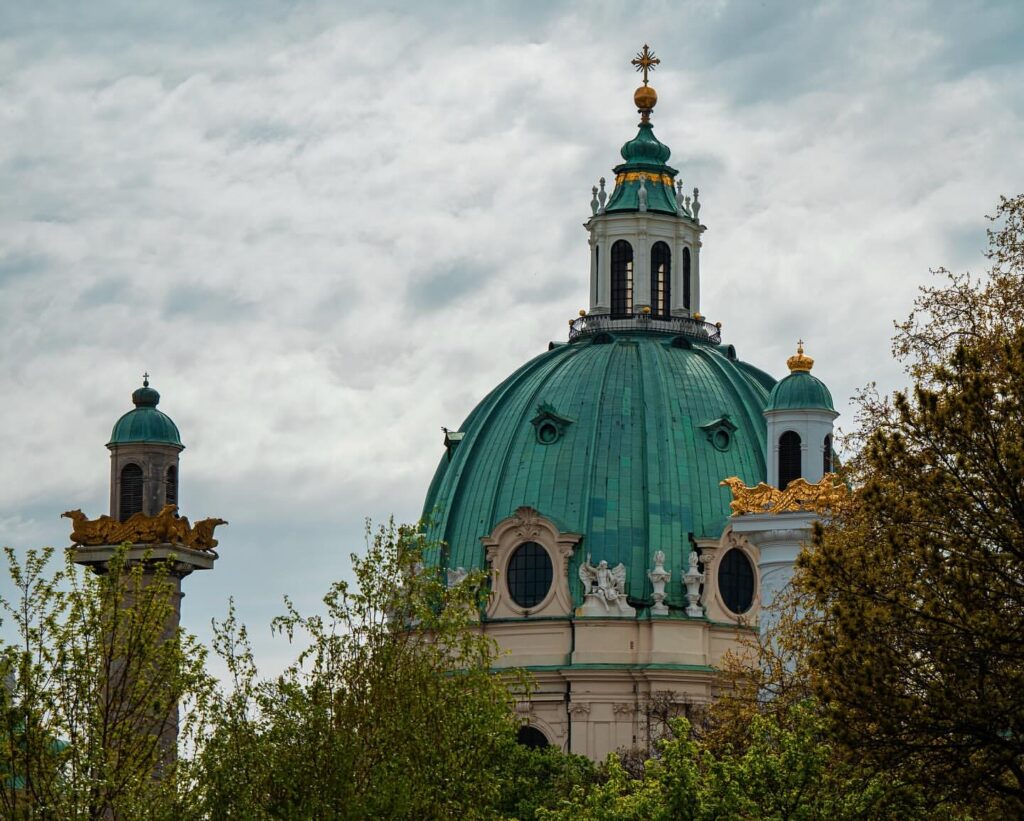
Vienna’s Karlskirche (St Charles Church), recognized by its distinctive turquoise dome, is a significant example of late Baroque architecture. Its construction was initiated by Emperor Charles VI’s vow during the 1713 plague, with the church dedicated to St. Charles Borromeo. Largely designed by Johann Bernhard Fischer von Erlach and completed in 1737, Karlskirche showcases an eclectic synthesis of styles. Notable features include its prominent dome, a classical portico, and two large triumphal columns. Inspired by Roman precedents, these columns bear detailed spiral reliefs narrating episodes from the life of its patron saint, embedding a visual story directly into the facade.
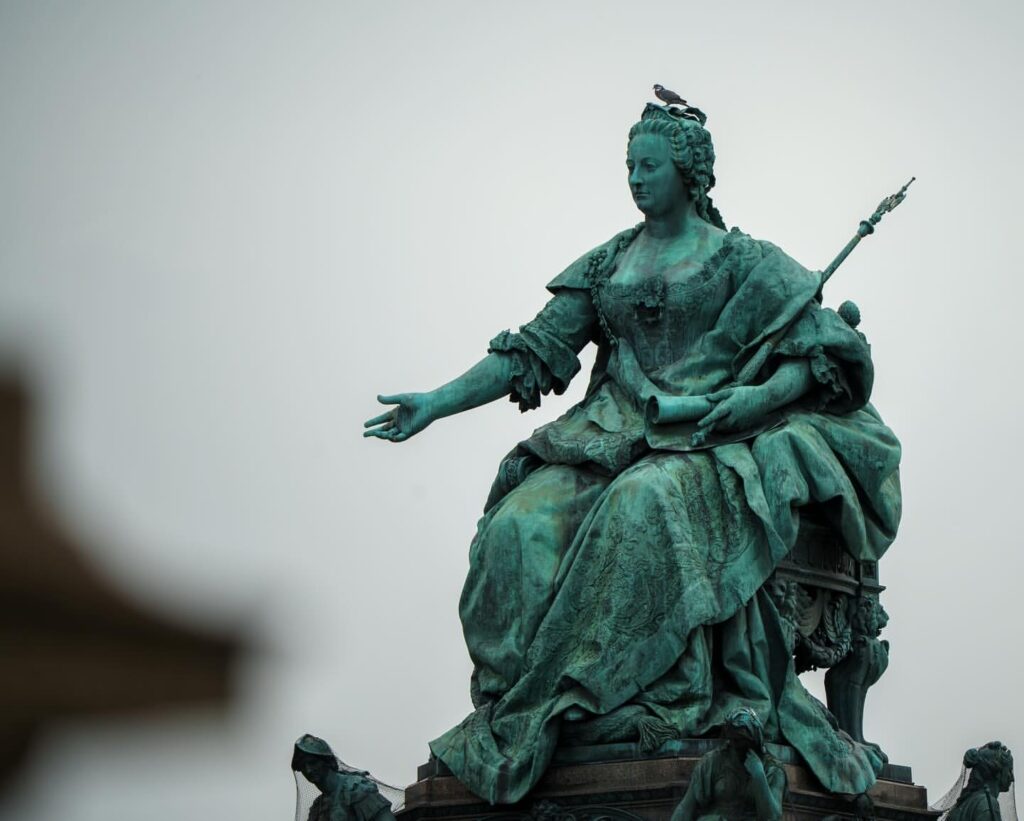
In Vienna’s Maria-Theresien-Platz stands the prominent monument to Empress Maria Theresa (1717-1780), the Habsburgs’ only female sovereign—seen here momentarily adorned with a rather informal avian visitor. Unveiled in 1888 and primarily the work of sculptor Kaspar von Zumbusch, this grand bronze depicts the influential 18th-century ruler enthroned, holding the Pragmatic Sanction which secured her succession. The monument is also notable for the array of statues at her feet, representing key military, political, and cultural figures from her era, thereby highlighting the comprehensive impact of her reforms and long reign over the Austrian state.
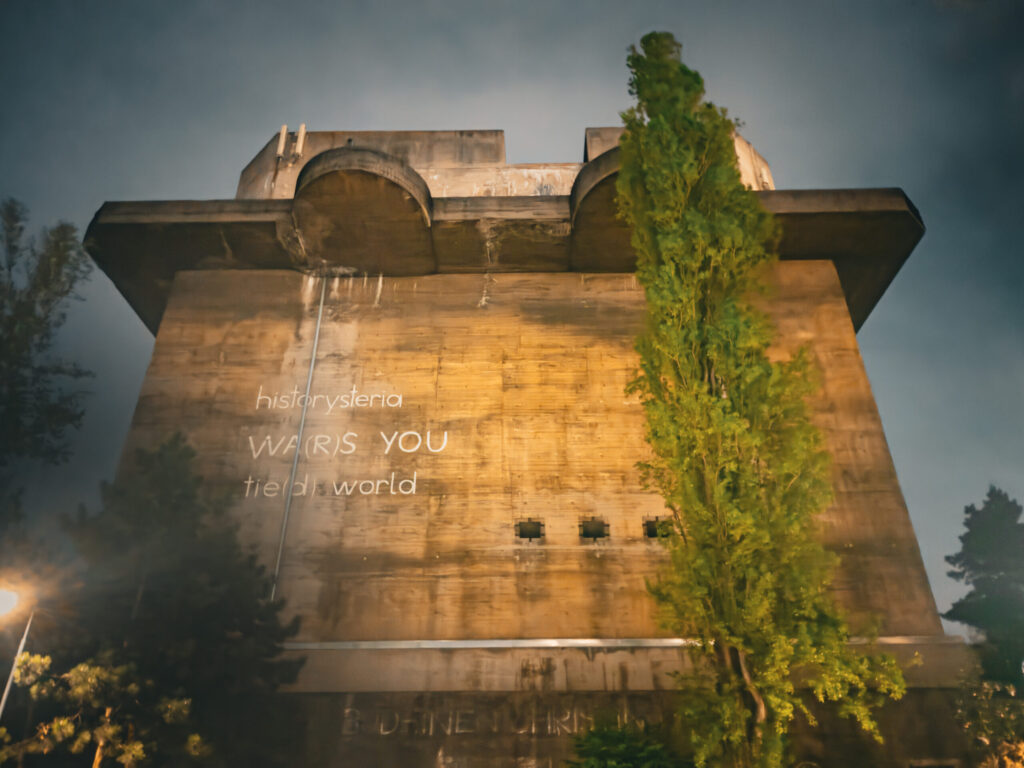
The first thing I did upon landing in Vienna was to go on a late-night run. Around the 3km mark, a dark behemoth loomed ahead. I had to investigate. Arriving at its base, I was confronted by a colossal, windowless structure, utterly out of place with the historic city. Baffled by what it could be, I just snapped a shot, its sheer scale and sombre presence making a stark impression in the dim light.
Later research revealed the unsettling truth: I’d encountered one of Vienna’s infamous Flak towers. During World War II, Nazi Germany constructed three pairs of these immense concrete fortresses across the city – six towers in total. Each pair featured a ‘G-Tower’ (Gefechtsturm) armed with heavy anti-aircraft artillery, and an ‘L-Tower’ (Leitturm) for command and radar, both designed to also shelter thousands of people from air raids. Engineered to be virtually indestructible, these towers were intended as much as symbols of enduring power as vital military installations. Today, these chilling relics punctuate Vienna’s skyline, too massive to easily demolish, standing as controversial monuments. Some, like the one I photographed with its enigmatic text, now serve as canvases for art or bear the simple graffiti of time, potent reminders of a history that refuses to be erased.
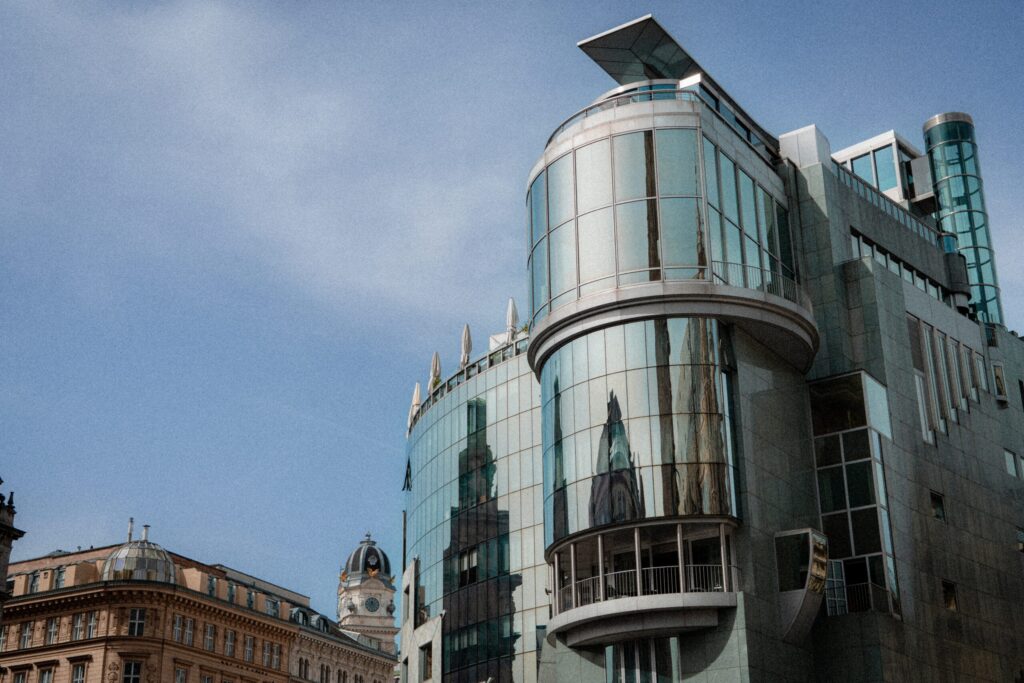
Gleaming with curves and reflective glass, Vienna’s Haas Haus stands in stark, yet deliberate, contrast to its ancient neighbour, St. Stephen’s Cathedral, whose spire is mirrored in its facade here. When architect Hans Hollein’s postmodern design was completed in 1990 on the historic Stephansplatz, it ignited considerable debate. The building’s design, however, actively engages with its centuries-old surroundings through these very reflections, creating a dynamic interplay between Vienna’s rich architectural past and its modern aspirations. It serves as a prominent, and once controversial, example of the city’s ongoing dialogue between heritage and contemporary development.
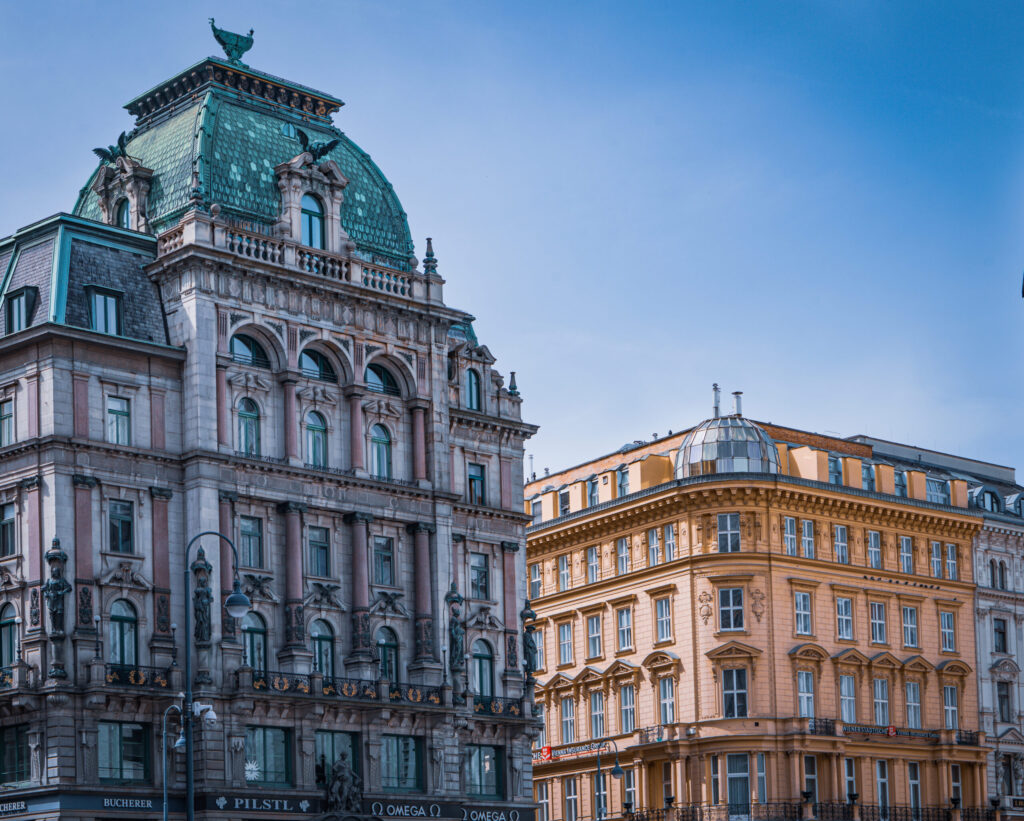
The Palais Equitable, seen here on the left, became my favourite architectural discovery in Vienna to photograph. Completed in 1891 at Stock-im-Eisen-Platz to serve as the lavish local headquarters for The Equitable Life Assurance Society, its elaborate facade and distinctive verdigris copper roof are stunning examples of the city’s late 19th-century ambition. While this particular photograph captures its impressive upper levels, the building is also famously home to the medieval ‘Stock im Eisen’ (a nail-studded tree trunk) nestled at its street-level corner, a unique artifact deeply entwined with Vienna’s ancient folklore and the square’s name.
What began as an impulse trip to Vienna, hastily organised over the phone, quickly blossomed into a visit to one of my favourite cities in recent memory. The trip might have started on a rather sour note with Bayern Munich’s loss to Inter Milan, but any initial disappointment was swiftly swept away. The city’s sheer beauty and grandeur, combined with the wonderful company of my Opa, lifted my spirits and secured this Viennese adventure a permanent, cherished spot in my memory.